Best VPS for Forex Trading in 2026 Low-Latency VPS for MT4 & MT5

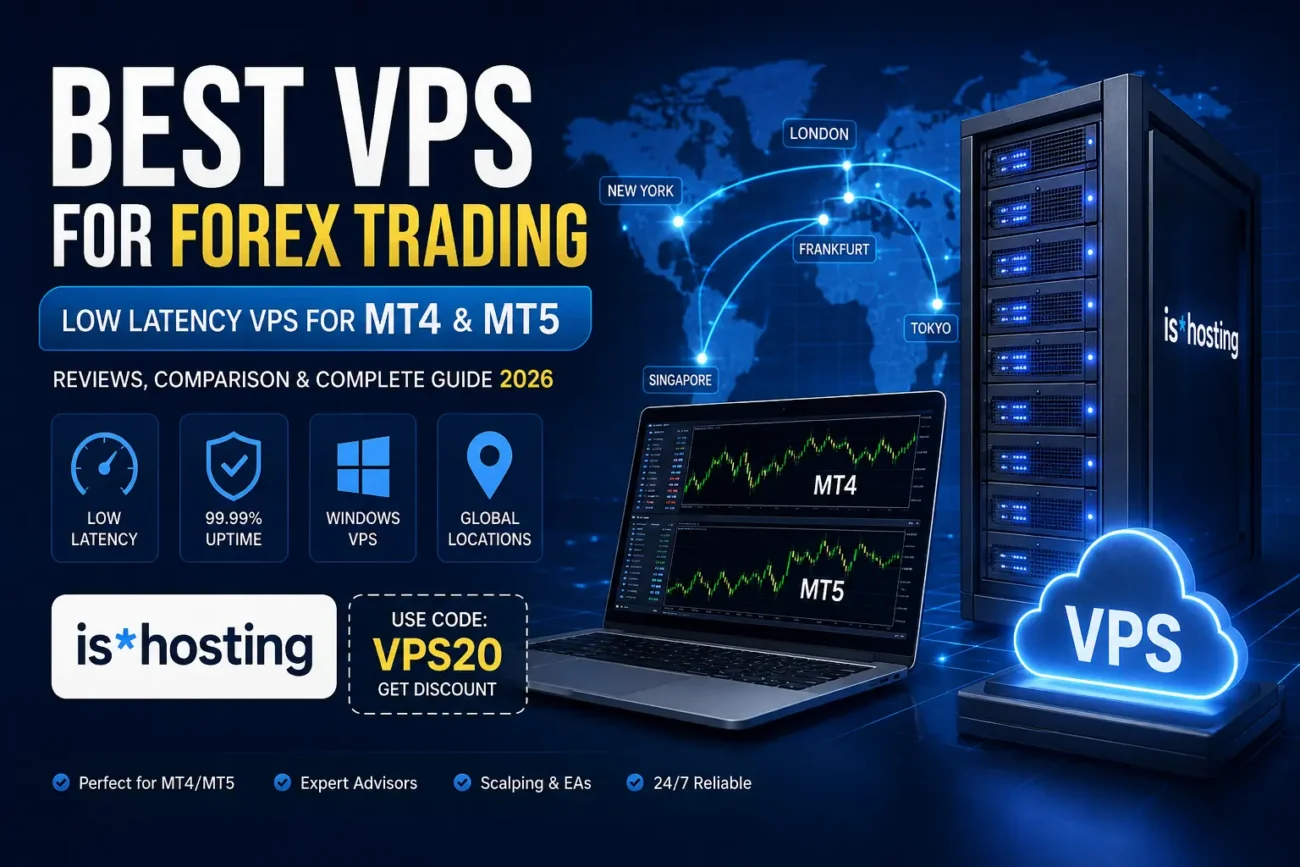
Best VPS for Forex Trading in 2026: Low-Latency VPS for MT4 & MT5

If you trade Forex using MetaTrader 4, MetaTrader 5, Expert Advisors (EAs), or automated trading strategies, running your trading platform from your personal computer is not always the best solution.

Your internet connection can disconnect. Your computer can restart. Windows updates can interrupt your trading terminal. Even a short outage can leave an Expert Advisor offline while the market is moving.

A Forex VPS (Virtual Private Server) solves many of these problems by keeping your MetaTrader platform running on a remote server 24/7.

But not every VPS is suitable for Forex trading.

For traders, the most important factors are not simply RAM and CPU. Server location, network latency, Windows support, uptime, IP quality, and overall reliability can be much more important.

In this guide, we review some of the best VPS options for Forex trading in 2026 and explain why is*hosting is one of the strongest choices for retail traders and automated trading.


What Is a Forex VPS?

A Forex VPS is a virtual server that runs your trading platform continuously on a remote data center.

Instead of installing MT4 or MT5 on your home computer:

Your computer → Internet → VPS → Broker

Your Expert Advisors and trading terminals continue running on the VPS even when your own computer is switched off.

For example, you can install:

  • MetaTrader 4
  • MetaTrader 5
  • Expert Advisors
  • Trading indicators
  • Trade copiers
  • Multiple trading accounts
  • Automated trading systems

Once everything is configured, you can disconnect your personal computer while your trading environment continues running.

This is especially useful for traders who run automated strategies.


Why Do Forex Traders Need a VPS?

There are several reasons why a VPS can be useful for Forex trading.

1. Your Computer Does Not Need to Stay On

An EA needs MetaTrader to remain open.

If you shut down your PC, your EA stops working.

With a VPS, the trading platform runs on a remote server.

You can close your laptop, leave your house, or even turn off your computer completely while your MT4 or MT5 terminals continue operating.


2. Better Stability

Home internet connections are not designed specifically for 24/7 automated trading.

You can experience:

  • Internet outages
  • Router problems
  • Power cuts
  • Computer crashes
  • Windows updates
  • Accidental shutdowns

A professional VPS infrastructure is designed to remain online continuously.

This doesn’t guarantee that your trades will be profitable, but it can remove several technical problems associated with running an EA from a personal computer.


3. Lower Latency

Latency is one of the most important factors when choosing a Forex VPS.

Latency is essentially the time it takes for data to travel between your trading terminal and your broker’s server.

For example:

Trader → VPS → Broker

If your VPS is geographically close to your broker’s trading infrastructure, the network path can be shorter.

This can be particularly important for:

  • Scalping
  • High-frequency strategies
  • News trading
  • Automated trading
  • Multiple trade executions
  • Short-term Expert Advisors

For swing traders or long-term strategies, a difference of a few milliseconds may be much less important.


How Important Is VPS Location for Forex?

This is one of the biggest mistakes traders make when choosing a VPS.

Many people simply choose the cheapest server without checking where the broker’s infrastructure is located.

Instead, you should first investigate where your broker’s trading servers or execution infrastructure are located.

Common financial data-center hubs include:

  • New York
  • London
  • Frankfurt
  • Tokyo
  • Singapore

For example, if your broker’s infrastructure is located around London, a VPS in Europe may provide a better network path than a server located on another continent.

However, you should always test the actual latency between your VPS and your broker.

Don’t choose a VPS location simply because it is geographically close on a map.

Network routing matters.


What Should You Look for in a Forex VPS?

Before buying a VPS for MT4 or MT5, consider these factors.

1. Server Location

The first thing to check is whether the provider offers a location close to your broker.

A provider with many global locations gives you more flexibility.

2. RAM

For a single MT4 or MT5 terminal, you generally don’t need an enormous amount of RAM.

However, RAM requirements increase when you run:

  • Multiple terminals
  • Many charts
  • Several EAs
  • Custom indicators
  • Trade copiers
  • Large historical datasets

For many retail traders, 2–4 GB can be a reasonable starting point.

3. CPU

CPU performance becomes more important when your EAs perform heavy calculations or you run several terminals simultaneously.

For a simple EA, you don’t necessarily need a high-end server.

4. Windows Support

MT4 and MT5 are commonly used on Windows.

A Windows VPS can make installation and management significantly easier for traders who don’t want to configure MetaTrader through Linux compatibility layers.

5. Uptime

Your trading terminal needs to stay online.

A VPS provider with a strong uptime guarantee is preferable to an inexpensive server with frequent interruptions.

6. IP Address

A stable server IP can be useful when running trading infrastructure remotely.

However, traders should distinguish between a normal VPS IP and a true trading-network advantage.

Having a dedicated IP does not automatically mean your broker will execute trades faster.

7. Technical Support

This is particularly important for beginners.

If MT4 or MT5 stops working, you want to be able to contact the hosting provider quickly.


Best VPS for Forex Trading in 2026

After comparing the main factors traders care about — location, Windows support, performance, uptime, pricing, and suitability for MetaTrader — these are some of the providers worth considering.

VPS ProviderBest ForWindowsMain Advantage
is*hostingRetail & EA tradersYesLocations + value
BeeksFXScalping & latency-sensitive tradingYesFinancial infrastructure
ForexVPS.netForex-focused tradersYesTrading-specific features
ContaboBudget usersAvailable as optionHardware per dollar
HostingerLinux/algo usersMainly Linux VPSAffordable resources

For most retail Forex traders running MT4 or MT5, is*hosting is one of the most balanced choices.

is*hosting Review for Forex Trading

Our Rating: 9/10

is*hosting is a VPS provider offering servers across a large number of locations worldwide.

According to its current information, the provider offers VPS locations across 40+ countries and around 45 locations, giving traders plenty of options when choosing a server close to their broker.

This is particularly useful for Forex traders because the ideal VPS location depends heavily on where the broker’s infrastructure is located.


is*hosting VPS Features for Traders

The current trading VPS comparison from is*hosting lists its entry Windows trading plan at around $10.19/month with annual billing, with 2 GB RAM, 1 vCPU, 30 GB SSD storage and 3 TB traffic. Higher configurations are available for traders running more terminals.

The provider also states that Windows licensing is included rather than appearing as a separate charge on the invoice.

For traders, this makes the pricing easier to understand.

You don’t want to see a VPS advertised at one price and discover several additional charges when you reach checkout.


Which is*hosting VPS Should You Choose?

Start VPS — For Beginners and Small EA Setups

If you are running:

  • 1–3 EAs
  • One or two MT4/MT5 terminals
  • Basic indicators
  • A small number of charts

the entry-level configuration may be enough.

It gives you a relatively inexpensive way to move your trading setup away from your personal computer.

Medium VPS — For Active Traders

If you run several terminals, multiple EAs, or more demanding indicators, moving to a larger configuration gives you more RAM and CPU headroom.

This is a better choice for traders running multiple accounts or several automated systems simultaneously.

Premium VPS — For Larger EA Setups

If you are running many terminals and strategies, additional resources become increasingly important.

Instead of trying to squeeze ten trading terminals into a small VPS, it’s better to give the system enough resources to operate comfortably.


is*hosting Server Locations

One of the biggest advantages of is*hosting for Forex traders is its broad geographic coverage.

Depending on availability, traders can select locations including major regions such as:

  • United States
  • United Kingdom
  • Netherlands
  • Germany
  • Japan
  • Singapore
  • Switzerland
  • And many other locations

The provider currently advertises around 45 locations across 40 countries.

This gives traders considerably more flexibility when trying to find a server close to their broker.

is*hosting and Forex VPS Latency

There is an important distinction here.

A VPS being located in the same city as your broker does not automatically mean you will receive 1 ms latency.

Your actual latency depends on:

  • Broker infrastructure
  • Data center
  • Network provider
  • Routing
  • Server location
  • Broker server location
  • Internet congestion

Therefore, don’t buy a VPS because someone promises a specific ping without testing it.

The better approach is:

Broker location → Choose nearby VPS → Connect MT4/MT5 → Measure actual latency

This is much more realistic.


Is is*hosting Good for MT4?

Yes.

MT4 traders can use a Windows VPS to keep MetaTrader running continuously.

This is particularly useful if you’re running:

  • Forex Expert Advisors
  • Gold EAs
  • Scalping EAs
  • Grid systems
  • Trend-following systems
  • Trade copiers
  • Multiple MT4 accounts

The goal is simple:

Keep MT4 online 24/7 without keeping your personal computer running.


Is is*hosting Good for MT5?

Yes.

MT5 traders can use the same type of Windows VPS infrastructure.

MT5 can consume more resources depending on the number of charts, indicators, EAs and historical data being used.

If you’re running several MT5 terminals, consider upgrading your RAM and CPU rather than choosing the smallest possible plan.


is*hosting vs BeeksFX

BeeksFX is particularly interesting for traders who care heavily about financial-market infrastructure and very low latency.

Its infrastructure includes locations associated with major financial data centers.

That makes it attractive for:

  • Scalpers
  • News traders
  • HFT-style strategies
  • Latency-sensitive systems

However, you’re paying a premium for this type of infrastructure.

For the average retail trader running a normal EA, paying significantly more for ultra-low latency may not provide a meaningful advantage.

Winner for most retail traders: is*hosting

Winner for highly latency-sensitive strategies: BeeksFX


is*hosting vs ForexVPS.net

ForexVPS.net is specifically focused on Forex and MetaTrader users.

It offers trading-oriented features and multiple locations.

This can be attractive for traders who want a more specialized Forex hosting environment.

However, is*hosting has an important advantage:

A broader general-purpose VPS infrastructure with many locations and competitive pricing.

Winner for specialized Forex features: ForexVPS.net

Winner for flexibility and overall value: is*hosting


is*hosting vs Contabo

Contabo is known for offering large amounts of RAM and CPU resources at relatively low prices.

If your main priority is raw hardware per dollar, Contabo can be attractive.

However, Forex traders shouldn’t look only at RAM and CPU.

You should also consider:

  • Location
  • Network routing
  • Windows costs
  • Uptime
  • Support
  • Trading latency

A VPS with 16 GB RAM isn’t necessarily better for Forex than a VPS with 4 GB RAM if the latter has a much better network path to your broker.

Winner for raw hardware value: Contabo

Winner for Forex-oriented VPS simplicity: is*hosting


is*hosting vs Hostinger

Hostinger is another well-known hosting company with affordable VPS plans.

However, its VPS offering is more general-purpose and is particularly interesting for Linux users, developers and applications.

If your main goal is running MT4 or MT5 on Windows, is*hosting is the more natural choice.

Winner for MT4/MT5 Windows trading: is*hosting

Winner for affordable Linux workloads: Hostinger


Best VPS for Different Types of Forex Traders

Best VPS for Beginners

is*hosting

If you’re running one or two EAs and simply want a stable environment for MT4 or MT5, is*hosting offers a good balance between price and resources.

Best VPS for Multiple EAs

is*hosting Medium or higher

More terminals and indicators mean you should have additional RAM and CPU headroom.

Best VPS for Scalping

BeeksFX or another financial-market-focused VPS

For extremely latency-sensitive strategies, network proximity can be more important than raw hardware.

Best Budget VPS

is*hosting or Contabo

Compare the final price after adding Windows and other requirements.

Best VPS for Python Trading Bots

This depends on your broker/API and operating system.

Linux VPS providers can offer excellent value for Python-based systems.


How to Choose the Correct VPS Location

Before ordering your VPS, follow this simple process.

Step 1: Find Your Broker’s Server

Ask your broker:

Where is the trading server or execution server for my account located?

Some brokers publish this information. Others will provide it through customer support.

Step 2: Choose the Closest Appropriate VPS Location

If your broker uses infrastructure in London, consider a UK or nearby European VPS.

If the infrastructure is in New York, consider a US East Coast location.

If the broker uses Tokyo infrastructure, choose a Japanese location.

Step 3: Test Your Ping

After setting up your VPS, test the connection to the broker.

Don’t rely purely on marketing claims.

Step 4: Monitor Your Trading

Run your EA and monitor:

  • Ping
  • CPU usage
  • RAM usage
  • Connection stability
  • MT4/MT5 disconnections

Then decide whether you need a larger VPS or a different location.


How Much RAM Do You Need for MT4 or MT5?

There is no universal answer.

Your RAM requirements depend on your setup.

Basic setup

1–2 terminals:

2 GB RAM

Medium setup

Several terminals and EAs:

4 GB RAM

Heavy setup

Many terminals, indicators and automated systems:

8 GB+ RAM

Don’t automatically buy 16 GB or 32 GB because it sounds better.

Buy according to your actual workload.


Does a Forex VPS Make Your Trading Strategy Better?

No.

This is extremely important.

A VPS does not make a losing strategy profitable.

It doesn’t improve:

  • Your entry strategy
  • Risk management
  • Win rate
  • Trading psychology
  • Market analysis

What it can improve is the technical reliability of your trading environment.

Think of a VPS as infrastructure.

Your strategy is still responsible for your trading results.


VPS and Forex Scalping

Scalpers need to pay more attention to latency.

When trades are opened and closed quickly, even small execution delays can matter.

For these traders, server location becomes extremely important.

However, there is a difference between:

Low-latency VPS

and

True financial-market colocation.

A normal VPS located near a financial center can provide a good network path, but that doesn’t necessarily mean it is physically inside the same facility as your broker’s matching engine.

If your strategy genuinely depends on sub-millisecond execution, investigate specialized financial hosting and colocation instead.


How to Secure Your Forex VPS

Your VPS is essentially a computer connected to the internet.

Security matters.

We recommend:

  • Use a strong administrator password
  • Keep Windows updated
  • Enable firewall protection
  • Avoid installing unnecessary software
  • Use trusted EA files
  • Don’t download unknown executables
  • Use secure RDP practices
  • Monitor login activity
  • Keep backups of your trading configuration

Never treat your VPS as an anonymous computer.

It is part of your trading infrastructure.


Our Final Verdict

For the majority of retail Forex traders, is*hosting is one of the best all-around VPS options in 2026.

It offers a combination of:

  • Windows VPS support
  • Multiple global locations
  • Competitive pricing
  • MetaTrader compatibility
  • Strong uptime commitments
  • Different resource configurations
  • Support for automated trading
  • Flexible server locations

Its biggest advantage isn’t simply the amount of RAM or CPU.

It’s the combination of price + location options + Windows + infrastructure.

For a trader running one or several MT4/MT5 terminals, that’s often more useful than paying a premium for infrastructure designed specifically for institutional-level latency.

If you’re running an extremely latency-sensitive HFT or scalping strategy, however, you should also compare specialized financial VPS providers such as BeeksFX.


Get Your is*hosting Forex VPS

If you’re ready to move your MT4 or MT5 setup to a VPS, you can check the available is*hosting plans here:

👉 [YOUR ISHOSTING AFFILIATE LINK HERE]

Promo Code: VPS20

If the code is accepted at checkout, use VPS20 to check whether the available discount applies to your selected VPS plan.

Tip: Always check the final price on the checkout page because VPS pricing, promotions and eligible plans can change.


Frequently Asked Questions

What is the best VPS for Forex trading?

For most retail traders, is*hosting is a strong all-around option because it combines Windows VPS support, multiple locations, competitive pricing and configurations suitable for MT4 and MT5.

Is a VPS necessary for Forex trading?

No. You can trade Forex directly from your computer. A VPS becomes useful when you want your MetaTrader platform and Expert Advisors to run continuously without relying on your personal computer and home internet connection.

Can I run MT4 on an is*hosting VPS?

Yes. A Windows VPS can be used to install and run MetaTrader 4 continuously.

Can I run MT5 on an is*hosting VPS?

Yes. You can install MetaTrader 5 on a compatible Windows VPS and keep your trading terminals running 24/7.

What VPS location should Forex traders choose?

Choose a location that provides a good network path to your broker’s trading infrastructure. Don’t choose based solely on geographical distance.

How much RAM do I need for Forex trading?

For a basic MT4/MT5 setup, 2 GB can be enough. Traders running multiple terminals, EAs and indicators may benefit from 4 GB, 8 GB or more depending on their workload.

Does a VPS reduce Forex slippage?

A VPS can potentially reduce network-related delays when it is well positioned relative to your broker, but it cannot eliminate slippage. Market volatility, liquidity, broker execution and other factors also affect execution.

Is a Forex VPS worth it for an Expert Advisor?

For traders running EAs 24/7, a VPS can be very useful because the EA can continue operating even when your personal computer is turned off or disconnected from the internet.

Final Recommendation

If you’re a retail Forex trader running MT4, MT5, Expert Advisors or automated trading systems, don’t choose your VPS based only on the cheapest price.

Look at the complete picture:

Location + latency + Windows + uptime + resources + support + total price.

For most traders, is*hosting offers a very strong balance between these factors.

If you want to test it yourself, check the available locations and VPS plans through the link below.
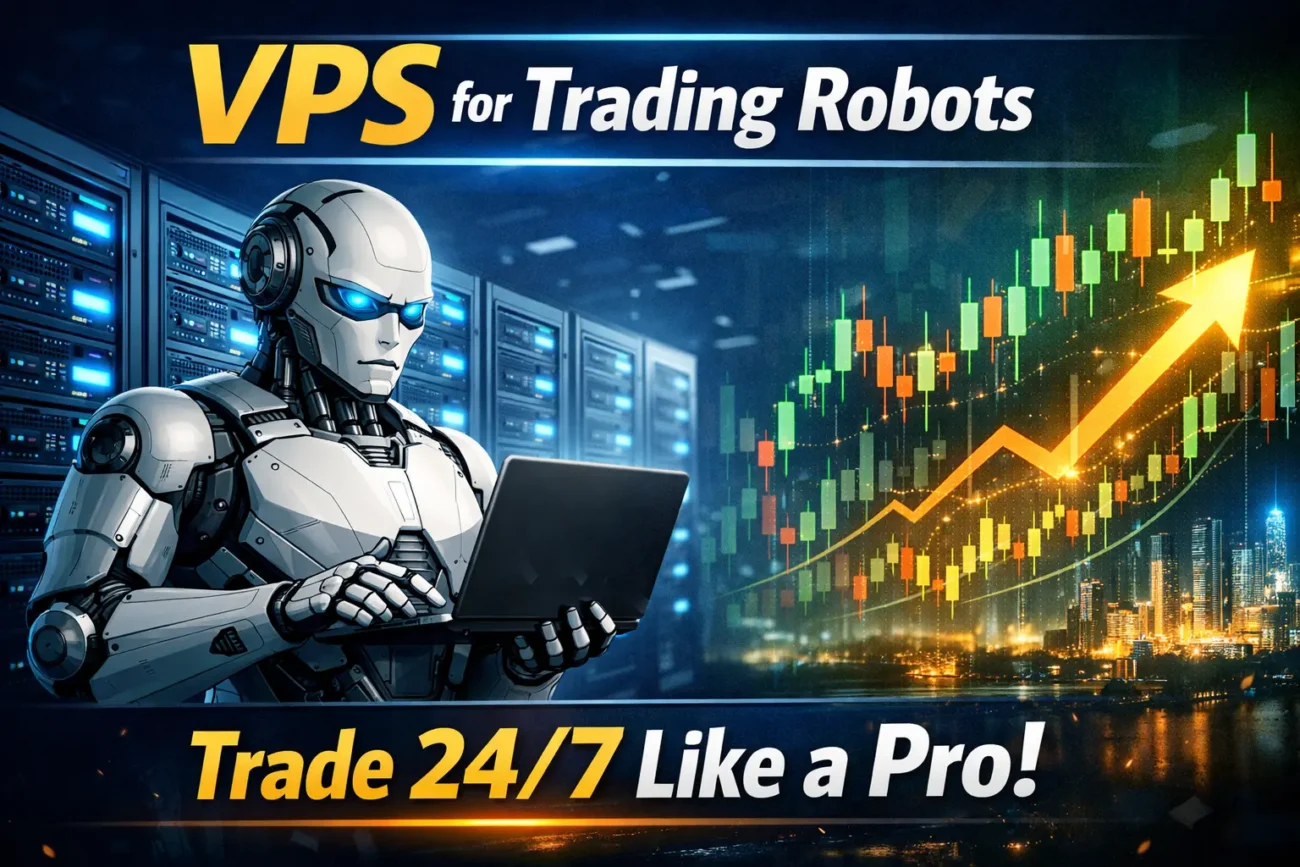
VPS for trading robots and automated forex systems

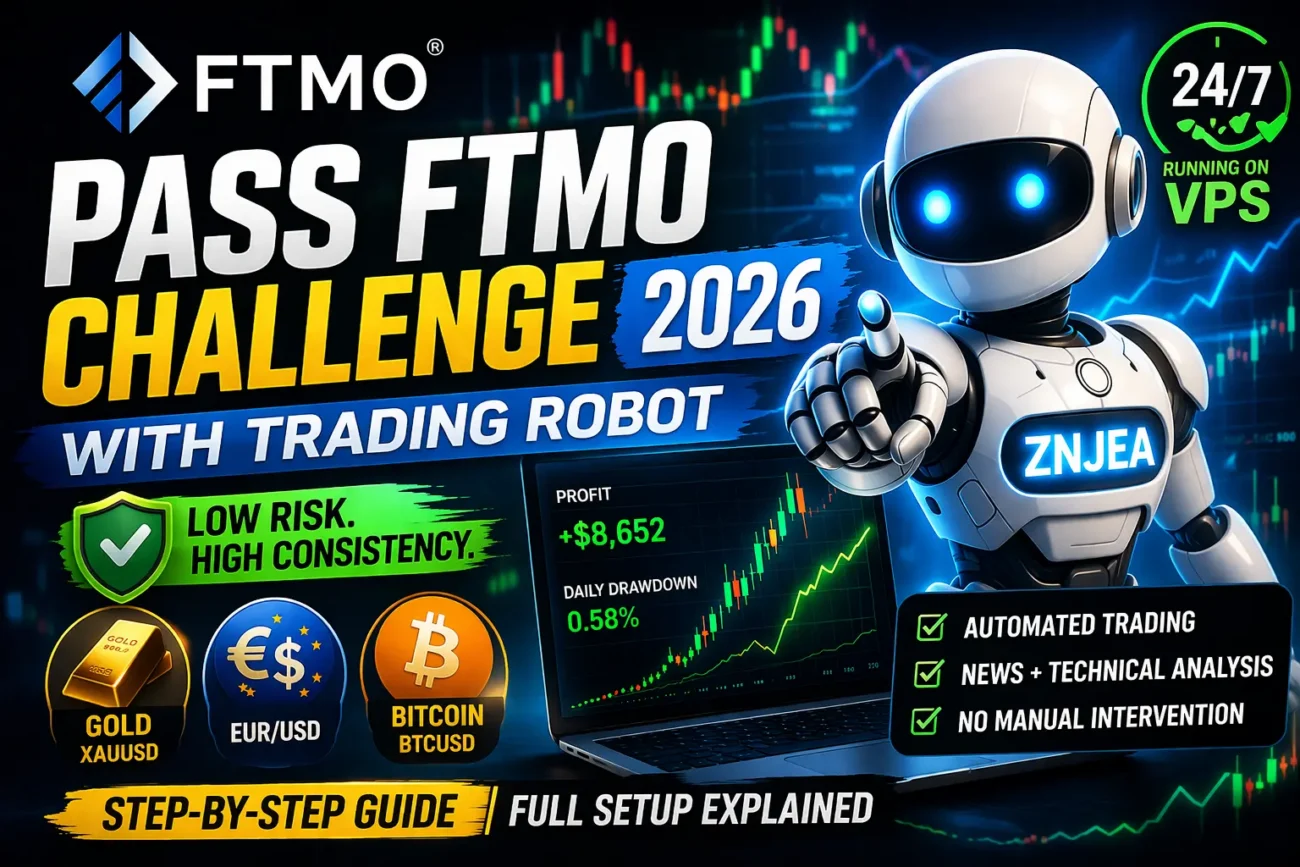
Why using a VPS is a MUST for Trading Robots

If you’re serious about automated trading, Expert Advisors (EAs), or passing Prop Firm challenges, then using a VPS is not an option anymore — it’s a necessity.

First, let’s be clear: trading robots need stability. When you run your EA on your personal laptop or PC, you’re exposed to many risks: power cuts, internet disconnections, system updates, crashes, or even you accidentally closing MT4/MT5. Any of these small issues can ruin a perfect trade or even blow a prop firm account.

A VPS (Virtual Private Server) solves all of this.

With a VPS, your trading robot runs 24/7 without interruption. Even if your computer is turned off, your EA keeps trading smoothly. This is extremely important for strategies that rely on precise entries, news trading, scalping, or sessions like London & New York open.

Another very important point is low latency. Good VPS providers place their servers close to broker servers, which means faster execution, less slippage, and better fills. For scalping robots and prop firm rules, this can make a HUGE difference between profit and loss.

Also, Prop Firms care a lot about consistency. A VPS helps you maintain stable performance, avoid execution errors, and respect drawdown rules. Many traders fail challenges not because their strategy is bad, but because of technical problems. Don’t let that be you.

Personally, after testing multiple VPS providers, I stick with one that gives me reliability, speed, and good pricing — especially for Forex and Prop Firm trading.

That’s why I recommend the VPS I personally use 👇

💻 VPS I personally use for Forex & Prop Firms
🔥 20% OFF — Code: MYVPS20
👉 Get it here

If you’re running trading robots and still not using a VPS, you’re trading with unnecessary risk. Upgrade your setup, protect your capital, and trade like a pro .

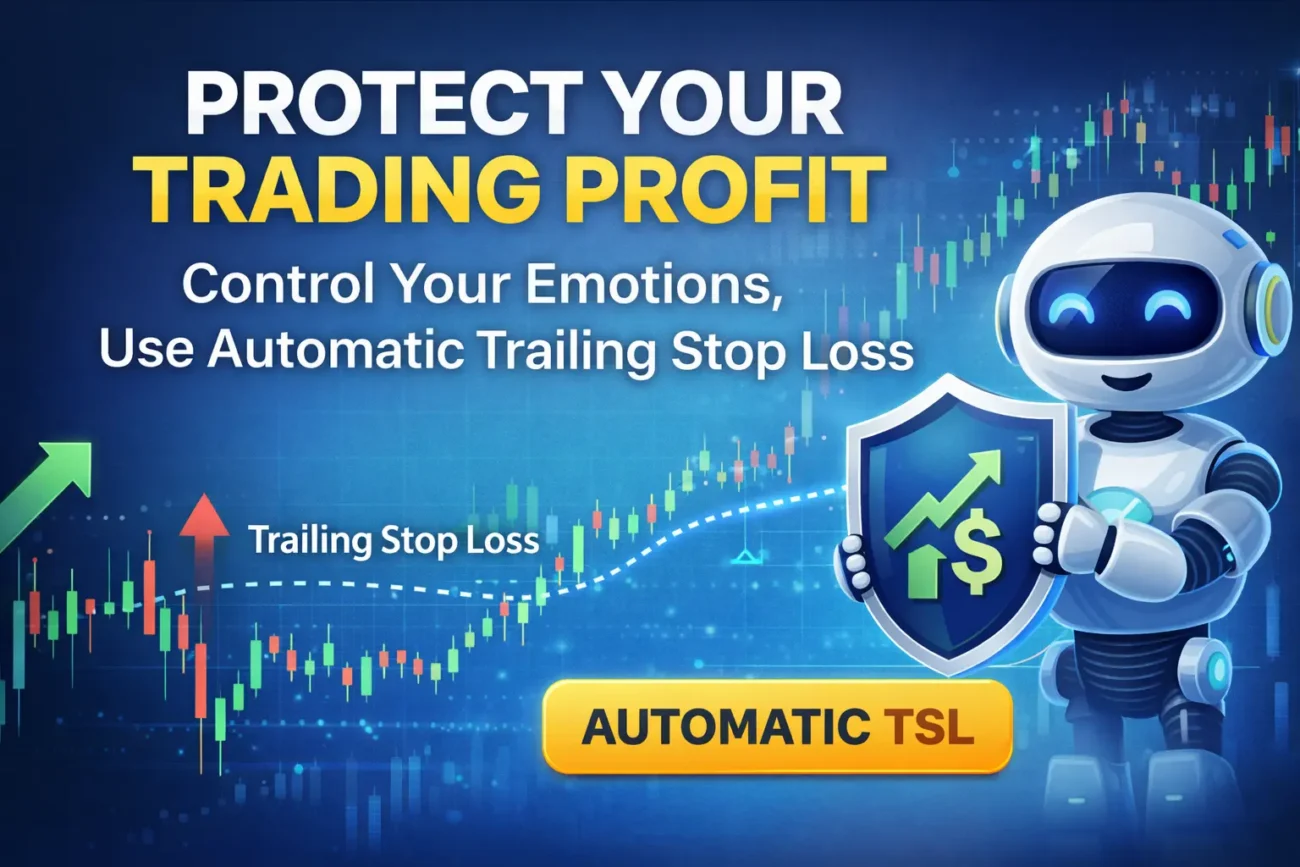
Protect trading profit using automatic trailing stop loss with ZNJEA trading robot

How to Protect Your Trading Profit (And Why Most Traders Fail to Do It)

Many traders can enter good trades.
Many traders can even reach take profit.

But very few traders know how to keep the profit.

That’s the real difference between a trader who survives…
and a trader who slowly gives everything back to the market.


The Common Scenario Every Trader Knows

It usually looks like this:

  • You enter a trade with confidence
  • The position goes into profit
  • Price touches your TP level
  • You hesitate…
  • You move your Stop Loss emotionally
  • The market reverses
  • The trade closes at Break Even or loss

At the end, you were right on direction…
but you didn’t get paid.

👉 The problem is not the entry.
👉 The problem is profit management.


The Harsh Reality of Trading

Winning money is a skill.
Keeping money is a mindset.

The market does not reward traders who are right most of the time.
It rewards traders who know:

  • When to protect
  • When to hold
  • When to let go

A simple truth every professional trader understands:

Money on the account is more important than money on the chart.


Losing Trader vs Profitable Trader

❌ Losing Trader

  • Takes profit too early out of fear
  • Moves Stop Loss emotionally
  • Hopes instead of managing
  • Turns profit into stress

✅ Profitable Trader

  • Has a profit protection plan before entry
  • Accepts missing the end of the move
  • Never regrets secured profit
  • Trades with logic, not emotions

3 Golden Rules to Protect Your Profit

1️⃣ Profit Is an Asset, Not a Dream

When the market pays you, your role is not to ask for more.
Your role is to protect what you already earned.

If the market reverses now, will you be satisfied with this profit?
If the answer is no → profit is not protected yet.


2️⃣ Move Stop Loss With Logic, Not Fear

A Stop Loss should follow market structure, not emotions.

Manual SL management often leads to:

  • Over-tight SL
  • Early exits
  • Emotional decisions

This is where most traders fail.


3️⃣ Taking Profit Is Never a Mistake

The only real mistake is:

Letting a winning trade become a losing one.

Professional traders don’t try to catch the entire move.
They focus on consistent extraction of profit.


Why Manual Profit Protection Fails

Even with a good strategy, manual management is dangerous because:

  • Emotions react faster than logic
  • Fear increases when profit grows
  • Discipline breaks under pressure

That’s why many profitable traders automate profit protection.


The Smart Solution: Automatic Trailing Stop Loss (TSL)

An automatic Trailing Stop Loss removes emotions completely.

Instead of asking:

“Should I move my SL now?”

The system does it for you, based on predefined rules.

Benefits of Automatic TSL:

  • Protects profit step by step
  • Locks gains logically
  • Adapts to market movement
  • Eliminates emotional decisions
  • Keeps consistency over time

How ZNJEA Robot Protects Your Profit Automatically

The ZNJEA trading robot is designed with one core objective:

Protect profits first. Grow accounts second.

Key Features:

  • Smart automatic Trailing Stop Loss
  • Logical SL movement based on price behavior
  • No emotional interference
  • Designed for long-term account survival
  • Suitable for prop firms and personal accounts

Instead of hoping the market continues,
ZNJEA secures profit as the market moves.


Final Thought

Protecting profit won’t make you rich overnight.

But it is the only reason your trading account survives long enough to grow.

Trading is not about maximizing one trade.
It’s about optimizing the entire journey.

If you master profit protection,
the market will finally start paying you consistently.


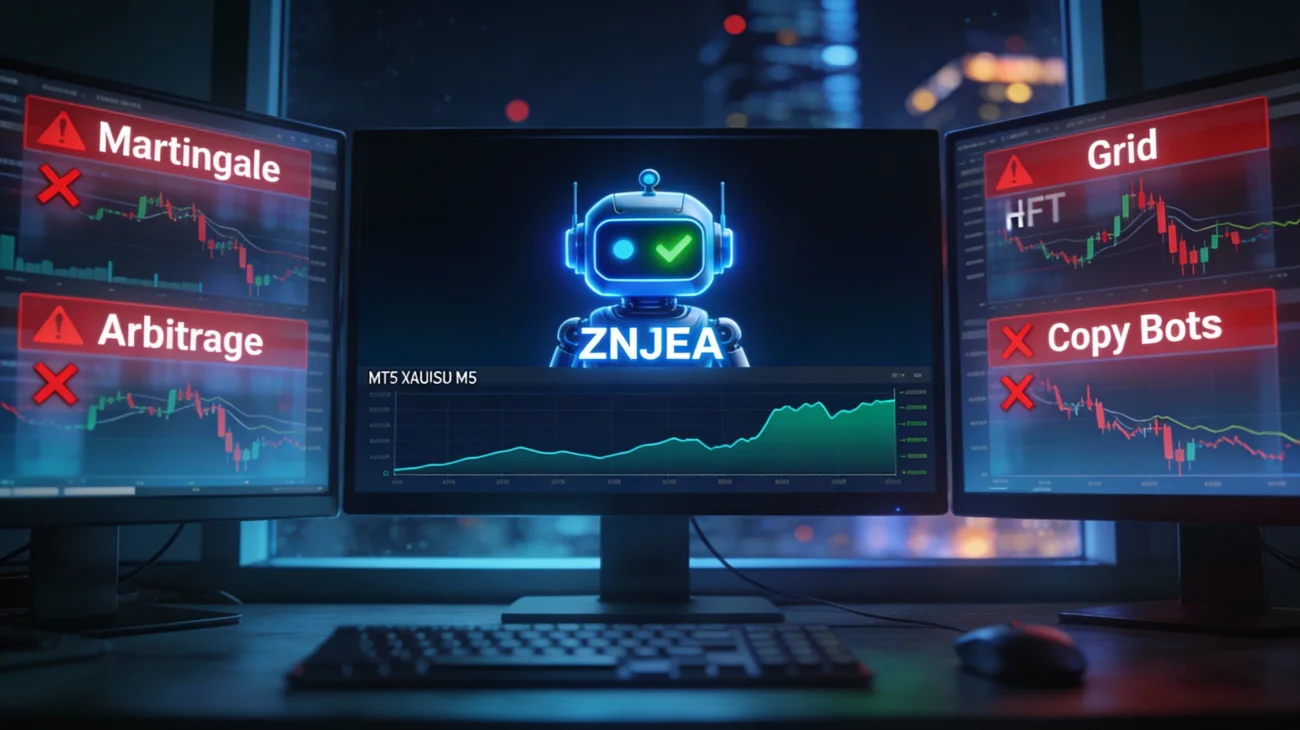
A modern forex trading desk at night with three monitors showing MT5 charts, a glowing blue ZNJEA trading robot with a green check mark on the center screen, and red warning overlays on the side screens labeled Martingale, Grid, HFT, Arbitrage, and Copy Bots, symbolizing safe versus banned robots for prop firms.

5 Types of Forex Robots Banned by Prop Firms: Save Your Account!

Prop firms like FundedNext, FTMO, and others allow EAs but strictly ban high-risk robots that exploit rules or cause massive drawdowns. This detailed guide covers the top 5 prohibited types, why they’re blocked, and how compliant scalpers like ZNJ EA Robot pass challenges easily.​

Martingale Robots: The Drawdown Killer

Martingale EAs double lot sizes after every loss, aiming to recover with one win. They start with 0.01 lots, then 0.02, 0.04, and explode during trends—often wiping 10-20% equity in hours.​

Prop firms ban them because they violate daily drawdown limits (typically 5%) and total max loss (10%). FundedNext calls this “gambling behavior” with excessive margin use over 70%, leading to immediate breaches. A single losing streak on XAUUSD M5 can trigger all stops, as seen in backtests where 8 consecutive losses hit 50% drawdown.​

Real Example: Imagine risking 1% on a $10k prop account. After 5 losses, your next lot is 32x larger—straight to violation. Compliant alternatives use fixed percentage risk (0.25-0.5%), like ZNJ EA’s trailing stops.

Grid Trading Bots: Uncontrolled Exposure Trap

Grid EAs place buy/sell orders at fixed intervals (e.g., every 20 pips) around price, profiting from ranging markets but exploding in trends. They open 10-50 positions without direction bias, tying up margin.​

Firms prohibit grids for “market manipulation” and high exposure—one strong trend activates all stops, breaching rules. FundedNext explicitly lists grid trading as banned, citing simultaneous losses and artificial activity. Servers strain from bulk orders, mimicking HFT issues.​

Risk Breakdown:

Grid SizeMax Exposure (1% Risk Base)Typical Prop Breach
5 levels5% equityDaily DD hit
10 levels10%+ equityAccount terminated
20+ levels20-50% equityInstant ban​

Trend-filtered scalpers on M5 with H1 EMA checks avoid this, trading only pullbacks.​

High-Frequency & Tick Scalping EAs: Server Killers

HFT/tick scalpers execute 100-1000s of trades per minute on M1 ticks, grabbing 1-2 pips each. They exploit spreads but overload demo servers and create “hyperactivity” (2,000+ messages/day).​

Prop rules ban them for distorting prices, freezing platforms, and unfair advantages. FundedNext restricts HFT and tick scalping explicitly—warnings escalate to suspension after 3 violations, or immediate disable at 15k messages. Quick Strike methods (seconds holds) face the same fate.​

Consequences Table:

Violation LevelAction TakenExample Impact
1st (2k msgs)WarningAdjust strategy
2ndSecond warningCumulative across accounts
3rd/15k msgsBreach/Suspension​Permanent ban

M5 new-bar EAs like ZNJ SCALPER limit to 5-10 trades/day, staying under radar.

Arbitrage & Latency Robots: Unfair Exploits

Arbitrage EAs hunt price differences between brokers, latency delays, or hedge accounts. Latency types delay orders for “guaranteed” fills during low liquidity “dead zones.”​

All props ban arbitrage outright—it distorts markets without real analysis. FundedNext prohibits all forms, including statistical arbitrage and demo errors exploitation, for violating TOS and fairness. Group hedging across accounts (opposite trades) gets terminated instantly.​

Banned Variants:

  • Broker arbitrage (price gaps)
  • Latency trading (execution delays)
  • Reverse arbitrage (hedge exploits)​

Single-broker trend scalpers with fixed SL/TP comply perfectly, no multi-account nonsense.​

Copy Trading & Hedging Bots: Correlated Risk Bombs

Copy EAs mirror signals from Telegram groups, other accounts, or services without original logic. Hedging bots open opposite trades across accounts for “risk-free” nets.​

Firms ban them to avoid mass correlated losses—if 100 traders copy the same signal and it fails, the firm bleeds. FundedNext allows intra-account hedging but bans cross-account/group hedging and external copy trading (even family). “Pass Your Challenge” services lead to permanent bans.​

Allowed vs Banned:

TypeAllowed?Reason
Same-account hedgeYesInternal risk management
Cross-accountNoCorrelated firm risk​
External signalsNoNo original strategy

Your custom MQL5 code ensures uniqueness for prop success.

Why Prop Firms Enforce These Bans

Props fund traders but protect capital via rules: 5% daily DD, 10% total, no exploits. Banned EAs fail because they prioritize short-term wins over sustainability—martingale/grids shine in backtests but crash live. FundedNext monitors for “abuse” like all-in trades near daily limits, treating them as gambling.​

Backtesting helps: Test over 1-3 years with 99% modeling quality. Real-time metrics (win rate >60%, avg hold >5min) prove compliance. Platforms like MT5 must match firm brokers—no custom data feeds.​

Compliant Alternatives: Build Prop-Ready EAs

Focus on low-risk scalpers:

  • M5 timeframe, H1 trend filter (EMA 200)
  • 0.25-0.5% risk/trade
  • Trailing stops, max 1-2 open trades
  • New-bar entries only

ZNJ EA embodies this: EMA cross in trend direction, percentage sizing, spread checks. Passes FTMO-style challenges consistently.​

Starter Settings for Props:

  • RiskPercent: 0.3
  • SL: 200 points (XAUUSD)
  • TP: 400 points
  • MaxSpread: 30 points
  • TrailStart: 150 points

How to Create Your Own Prop-Safe Robot

  1. Use MQL5: Start with OnTick() new-bar check.
  2. Add filters: H1 trend, spread < max.
  3. Risk calc: Lot = (Risk% * Balance) / (SL * PointValue)
  4. Test: Strategy Tester, then demo 1 month.
  5. Deploy: Optimize per firm (e.g., FundedNext no HFT).​

Full code templates available—avoids all bans above.​

Top Prop Firms for Compliant EAs (2025)

  • FundedNext: Clear rules, allows scalping if no hyperactivity.​
  • FunderPro: EA-friendly, low restrictions.​
  • WeMasterTrade: Instant funding, ZNJ-tested.​

Always read TOS—rules evolve.

Final Tips for Traders

Verify EA with prop simulator first. Avoid free “prop passers”—often hidden grids. Track metrics: <50 trades/day, drawdown <3%. Your edge? Original, risk-managed code like ZNJ series.

Forex market update today 2025 with dollar steady, rupee gains and yen under pressure.

Flash Crashes & Systemic Risk in Forex 2025: How AI Trading Bots Shape Market Stability

Introduction

The forex flash crash 2025 risk is rising as markets become more automated and AI-driven.


1. The Evolution of Forex Into an Automated Market

Automation dominates the forex ecosystem.
Therefore, more than 80% of global currency trades are now executed by algorithms and trading robots. This shift has introduced several advantages, including tighter spreads and faster execution.
However, it has also created a market environment where errors can spread quickly.

Forex automation is driven by:

  • High-frequency trading (HFT) systems
  • AI prediction models
  • EAs on MT4/MT5
  • Automated liquidity engines
  • Smart order routing

Because so many systems operate simultaneously, even small disruptions can escalate rapidly.


2. What Is a Flash Crash?

A flash crash is a sudden and sharp drop in price that occurs within seconds. It is usually followed by a fast recovery.
In other words, the market collapses temporarily before returning to normal levels.

Typical flash crash features include:

  • Rapid price collapse
  • Liquidity disappearance
  • Massive spread widening
  • Execution delays
  • Stop-loss cascades

These events are dangerous because traders have almost no time to react manually.


3. Why Flash Crashes Happen in Forex

3.1 Liquidity Withdrawal

During periods of uncertainty, liquidity providers may pull their orders instantly.
As a result, the market becomes unstable and more vulnerable to sharp movements.


3.2 Algorithmic Overreaction

Algorithms are built to react quickly to price changes.
Consequently, when one algorithm triggers a sell order, others may follow, creating a chain reaction.


3.3 Stop-Loss Cascades

Flash crashes often trigger thousands of stop-losses.
Therefore, the downward movement becomes amplified, especially during high volatility.


3.4 High-Frequency Trading Withdrawal

HFT systems dominate short-term liquidity.
When they detect unusual volatility, they immediately withdraw, causing spreads to spike dramatically.


3.5 Data Glitches

Sometimes, markets react to incorrect information or delayed feeds.
For example, a wrong economic number or duplicated price tick can trigger algorithmic panic.


3.6 AI Model Synchronization

AI models increasingly learn similar patterns.
Consequently, thousands of bots may buy or sell at the same time, causing coordinated volatility.


4. The Bigger Issue: Systemic Risk in Forex

Flash crashes are symptoms of deeper systemic issues.

4.1 Highly Connected Markets

Forex pairs influence each other.
Therefore, when a major pair like USD/JPY crashes, gold, crypto, and stock indices often react instantly.


4.2 Central Bank Concerns

Regulators are worried because:

  • AI evolves faster than regulation
  • Machine behavior is unpredictable
  • Market manipulation becomes harder to detect

Furthermore, even central banks now use AI tools to monitor global liquidity.


4.3 Retail Trader Exposure

Retail traders rely heavily on automation:

  • EAs
  • Copy trading
  • VPS setups

However, without proper filters, these tools can amplify risks during a flash crash.


4.4 Prop Firm Sensitivity

Prop firm accounts have strict daily limits.
Therefore, even a small flash crash can instantly violate rules.


5. How EAs Influence Flash Crashes

5.1 How EAs Make Crashes Worse

Certain robots increase market instability because:

  • They are over-optimized
  • They use martingale or grid strategies
  • They have no stop-loss logic
  • They do not include volatility filters

Consequently, these robots are often the first to blow accounts during chaotic events.


5.2 How EAs Help Prevent Losses

Modern EAs include:

  • Spread filters
  • ATR volatility control
  • News filters
  • Equity protection
  • Auto-shutdown during spikes

Moreover, advanced AI EAs can detect abnormal market behavior before humans notice.


6. Why Flash Crashes Are Increasing in 2025

6.1 Growing AI Adoption

As more traders use AI bots, the probability of synchronized behavior increases.

6.2 Retail Automation Growth

More retail EAs means more identical strategies.
Therefore, market reactions become amplified.

6.3 Volatile Global Conditions

Political instability and interest rate uncertainty are pushing markets into higher volatility.

6.4 Rise of Digital Currencies

New CBDC systems introduce additional liquidity risks.
As a result, the forex market becomes more complex.


7. How Traders Can Protect Themselves in 2025

7.1 Use Well-Designed EAs

Avoid robots that:

  • Use martingale
  • Trade without stop-loss
  • Do not manage volatility

Instead, look for EAs with:

  • Drawdown protection
  • Volatility filters
  • Smart SL/TP placement

7.2 Avoid Trading Major News

High-impact events such as NFP and FOMC often trigger flash crashes.
Consequently, staying out of the market during these moments reduces risk.


7.3 Use ECN Brokers

Brokers with deep liquidity reduce slippage.
Therefore, they perform better during sudden market drops.


7.4 Use a Low-Latency VPS

Execution speed matters during volatility.
In addition, VPS hosting prevents delays that could worsen losses.


7.5 Combine EAs With Manual Knowledge

Automation helps, but manual analysis improves risk management.
Moreover, traders who understand price action react better to unexpected events.


8. Are Forex Flash Crashes Becoming More Common in 2025?

Yes — they are.
However, better AI tools are also emerging to protect traders.

The future will rely on:

  • Human experience
  • Smart automation
  • Strong risk management

Therefore, the best traders in 2025 will combine technology with disciplined strategy.


Conclusion

In 2025, the forex flash crash 2025 risk is real, but traders can reduce it with smart automation and risk management.

Copy Trading for Small Accounts – Start with $100

If you’re looking to start trading but don’t have enough experience or time to analyze the market, Copy Trading is one of the best solutions available today. It allows you to automatically copy the trades of experienced traders and benefit from their strategies in real time.

What is Copy Trading?

Copy Trading is a system where your account automatically replicates the trades of a professional trader. This means:

  • Same entry points 📈
  • Same exit points 📉
  • No need for advanced trading knowledge

It’s a perfect option for beginners or anyone who wants to generate passive income from trading.

Why Choose This Service?

  • Start with only $100 minimum deposit
  • Potential monthly returns between 120% – 180% (depending on market conditions)
  • Fully automated system
  • Save time and avoid complex analysis

🛠️ How to Get Started

Getting started is simple and only takes a few steps:

1️⃣ Open Your Trading Account

Click here to register:
👉 https://one.justmarkets.link/a/triqlt0xq3

2️⃣ Fund Your Account

Deposit at least $100 to activate your account

3️⃣ Activate Copy Trading

Contact us directly on Telegram to connect your account:
👉 @znj1919

💸 Subscription Details

  • Monthly subscription: $50
  • Continuous support and updates
  • Performance monitoring

🎯 Who is This For?

  • Beginners with no trading experience
  • Busy individuals with no time to trade
  • Anyone looking to grow a small account

📈 Start Your Trading Journey Today

Don’t miss the opportunity to grow your capital with a proven system.
Open your account now and join our copy trading service.

👉 https://one.justmarkets.link/a/triqlt0xq3
👉 Telegram: @znj1919

⚠️ Disclaimer

Trading involves risk, and profits are not guaranteed. Results may vary depending on market conditions and liquidity.

The Future of EA Trading in 2026: What’s Changing for Prop Firm Traders

Introduction

The world of automated trading is evolving faster than ever. As 2026 approaches, traders who rely on Expert Advisors (EAs) — especially those participating in prop firm challenges — are facing a new era of opportunities and challenges. Prop firms are changing their rules, risk parameters, and evaluation systems, while AI-powered EAs are becoming smarter, faster, and more adaptive than ever before.

In this article, we’ll explore the key changes coming to the world of EA trading, what prop firms are doing to adapt, and how you can stay ahead with the right tools — like the ZNJ EA, a prop-firm-ready trading robot built for consistent and intelligent performance.


1. The Evolution of Prop Firms in 2026

Over the past few years, prop firms have exploded in popularity. Companies like MyFundedFX, FTMO, and OFP Funding have given traders access to capital without needing to risk their own money. However, 2026 is bringing new shifts in this industry:

✅ Stricter Risk Controls

Prop firms are tightening their rules to limit daily and overall drawdowns. This means EAs must now focus on risk management first and profit second.

✅ Realistic Trading Environments

Some firms are switching from demo-based evaluations to live or hybrid environments, testing the true performance of EAs under real market conditions.

✅ Anti-Bot Detection Systems

As EA usage grows, prop firms are using advanced detection systems to monitor for “unrealistic” patterns that suggest automation. This means smarter EAs that mimic human behavior will thrive.

✅ Instant Funding Is Rising

Instant-funded accounts (no challenge, no phases) are becoming a major trend. This offers EA traders faster access to capital — but also requires proven consistency.

These shifts mean that only well-optimized, AI-driven robots can pass evaluations and perform profitably under live-like market pressure.


2. How Artificial Intelligence Is Reshaping EA Trading

Traditional EAs rely on static algorithms or simple technical indicators. But in 2026, AI and machine learning will dominate the landscape of algorithmic trading. Here’s how:

  • Adaptive Strategy Selection: Future EAs will analyze market volatility and automatically switch between strategies — trend-following, scalping, or swing — based on real-time conditions.
  • Smart Risk Adjustment: Instead of fixed lot sizes, EAs will dynamically adjust positions based on floating equity, volatility, and current market exposure.
  • Data-Driven Optimization: AI will be used to continuously learn from trade history, improving decision-making without manual re-optimization.
  • Human-like Trade Timing: Advanced models are learning to place trades with random micro-delays to avoid prop firm detection and simulate human action.

The ZNJ EA is built with this new reality in mind. It combines intelligent trade management, adaptable risk controls, and human-like execution, making it perfectly suited for both prop firm challenges and real accounts.


3. The Prop Firm EA Trader’s New Reality

If you’re using an EA to trade with prop firms, 2026 will challenge you to evolve. Success will depend on how well your robot handles:

1️⃣ Risk Control

Prop firms are increasingly focused on traders who can maintain a low drawdown. EAs that aggressively chase profit are likely to fail. Tools like ZNJ EA focus on long-term consistency with intelligent stop losses and equity protection mechanisms.

2️⃣ Broker & Server Optimization

Latency will play a huge role. Running your EA on a fast VPS close to your broker (such as Europe or Singapore servers) can mean the difference between a passed and failed challenge.

3️⃣ Realistic Trade Behavior

Prop firms will penalize systems that execute too perfectly or too frequently. EAs must now include randomization and behavioral logic to look more “human.”

4️⃣ Long-Term Strategy Stability

Traders must think beyond just “passing the challenge.” The future is about sustainable performance that keeps prop firm accounts alive month after month.


4. Instant Funding and the Rise of AI EAs

One of the most exciting shifts for EA traders is the growth of instant funding programs. Instead of completing evaluation phases, traders can now access live capital immediately — sometimes with as little as $50 to $200 in entry fees.

For EA users, this means:

  • Immediate testing in real market conditions.
  • No need to pass restrictive phase challenges.
  • Faster profit sharing and payouts.

However, instant funding firms require high trust and consistent EAs. Robots like ZNJ EA are specifically designed for this — they control risk, avoid overtrading, and maintain steady equity growth, making them ideal for instant-funded accounts.


5. The End of “Set and Forget” Robots

The “old generation” of EAs often promised plug-and-play profits — but that’s no longer realistic in 2026. Markets are more dynamic, brokers are smarter, and prop firm systems are stricter. Traders who succeed now are the ones who treat their EA as a partner, not a miracle machine.

To stay profitable:

  • Backtest regularly under different conditions.
  • Use realistic lot sizes.
  • Run your EA on a reliable VPS.
  • Monitor news events and avoid high-impact volatility.

This is exactly the philosophy behind ZNJ EA: full transparency, adjustable settings for any account size, and a design made to pass both evaluation and real account phases with discipline and safety.


6. How to Future-Proof Your Trading in 2026

If you’re serious about trading with EAs, here are the steps to future-proof your approach:

  1. Choose a Verified EA: Always go for robots that show verified MyFXBook or live results. Avoid over-optimized or “too perfect” backtests.
  2. Prioritize Risk Management: Set strict limits for daily and max drawdown. The goal is to survive, not just win big.
  3. Stay Updated: Follow updates from your prop firms — rules and consistency guidelines can change anytime.
  4. Invest in a Quality VPS: Keep your EA online 24/7 with low ping.
  5. Test Before Scaling: Start with small funded accounts, and scale up once your EA proves stability.

By following these steps, you’ll be ready for the new trading era ahead — one where technology and discipline are equally important.


7. Why ZNJ EA Is Built for the Future

The ZNJ EA Prop Firm Robot is designed for traders who want to pass prop firm challenges and trade safely on real accounts.
Here’s what makes it stand out:

  • ✅ AI-driven risk management for stable performance
  • ✅ Pre-configured settings for multiple account sizes (10K to 200K)
  • ✅ Prop firm friendly — trades with realistic logic
  • ✅ Lifetime license — one-time payment, no renewals
  • ✅ Tested across multiple brokers and firms

Whether you’re trading with FTMO, MyFundedFX, or instant funding platforms, ZNJ EA adapts to your environment and focuses on long-term profitability — not just passing a challenge.

👉 Check it out here: https://znjea.com/product/znj-prop-firm-lifetime-license/


8. Conclusion

2026 marks a turning point for EA traders. The market is becoming smarter, prop firms are tightening their systems, and only adaptive, disciplined EAs will survive. The future belongs to traders who understand that automation and intelligence must work together.

If you’re ready to step into this future, make sure your trading tools are too.
The ZNJ EA is not just another trading robot — it’s a next-generation solution built for the evolving world of prop firm trading.

Stay ahead. Stay consistent. Trade smarter with ZNJ EA.

👉 Explore ZNJ EA Here

Product has been added to your cart